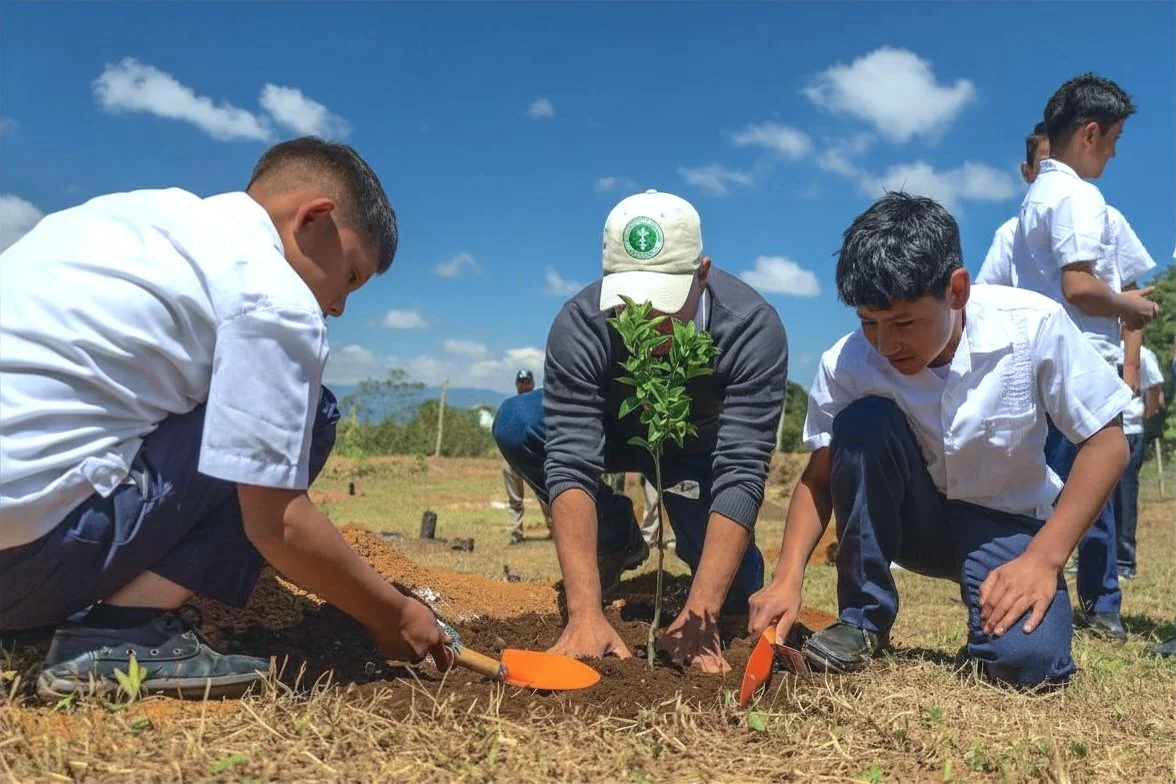
Earlier this month, we shared the story of a tree-planting day at the Centro Básico Unión Centroamericana primary school, in rural Intibucá, Honduras.
Schoolchildren gathered with their teachers and Sustainable Harvest International (SHI) team members to plant fruit trees, which will one day yield food for them and their families.
The orchard complements the large school garden SHI is helping the children cultivate. The organic produce that grows there will be served in the school’s meal program.
At SHI, our mission is to create a just and sustainable world, and we pursue this through a multi-tiered approach rooted in tree planting, farmer agricultural training, youth education, and green business development. It's this interconnected work that creates an ecosystem of change for people and the planet alike.
Why planting a tree matters
Tropical deforestation is deeply linked to habitat loss, soil and water degradation, and a range of other threats to local ecosystems and planetary health. Conventional agriculture techniques such as slash-and-burn agriculture – a form of cultivation where farmers cut down forests to create new fields and burn cuttings to fertilize the soil – can create vitality in the short term, but stress the land, which eventually becomes unproductive. These techniques contribute significantly to deforestation, and are often driven by rural poverty as farmers seek to grow bigger yields on ever-less-productive land in an effort to care for their families.
Addressing these issues with lasting solutions has been a founding directive of SHI from its very beginning in 1997.
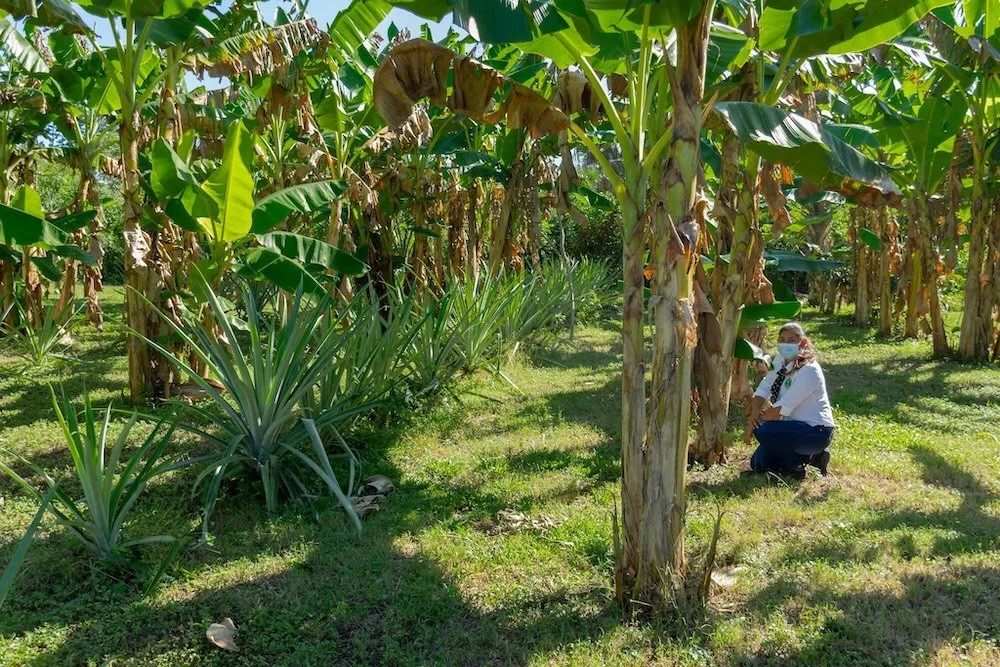
We work directly with rural farmers to preserve and restore habitats through planting trees and halt further destruction by introducing regenerative practices that work in tandem with traditional agricultural knowledge. This includes agroforestry, through which farmers diversify their plots by planting trees among their other crops – which leads to healthier soil, better yields, and more diverse produce to sell long term; reforesting critical watersheds; and planting of orchards that become a source of income and food for families and children.
(Read more about the intersecting benefits of planting trees on Green.Earth)
It takes many hands to nurture a single seedling into a young sapling, and welcoming that sapling to its forever home in an orchard, agricultural plot, or forest is truly a community effort.
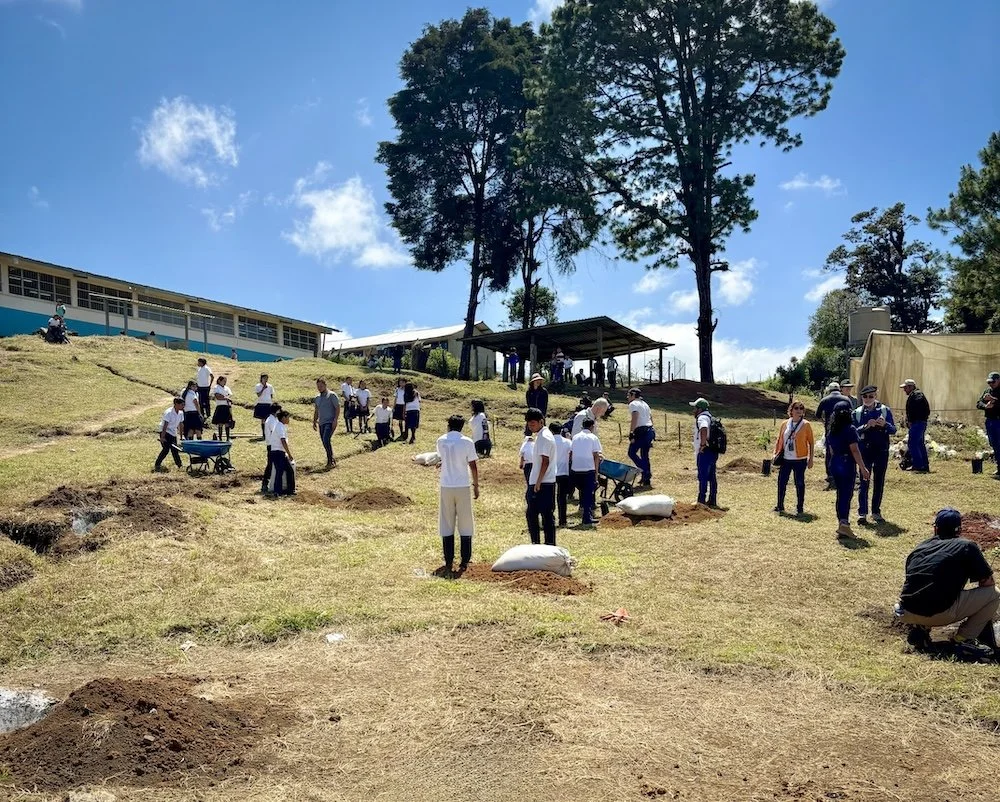
Before a sapling is planted…
It takes at least a month to plan out a tree planting or reforestation project. During this time, SHI works directly with communities to bring participants together, identify where to plant trees, the types of seedlings to plant, and who will assist in planting and eventually tending the trees.
After we identify a site for planting, we work with farmers to identify the best species to bring in based on a number of factors, including the climate. Which trees can withstand the colder winter months, or thrive based on the amount of rain a location receives?
Next, the community comes together to prepare the site. For timber trees, this might mean clearing weeds or invasive species, marking out the ideal spacing for the new trees, and finally, digging holes.
Fruit trees, like the ones planted in Intibucá, take even more preparation. For some locations, farmers first terrace the land to prevent soil erosion and preserve water. They amend the soil to make it ideal for fruit production using organic and other sustainable methods.
For example, bokashi – a fermented organic fertilizer – enhances the presence of microbes in the soil, which aid decomposition and cycle nutrients to improve soil health; while lime can help lower soil acidity to the proper level for the specific plant to flourish.
Finally, we must source the trees themselves. SHI may work together with farmers to grow seedlings in a local nursery, or coordinate with government institutions to grow or acquire plants. When that isn’t possible locally, we purchase saplings externally.
As a sapling grows…
According to our Honduras team, the benefits from planting trees are wide reaching.
“[Reforestation] grows environmental awareness among families in the community, resilient ecosystems, air purification, and regulation of the community's microclimate,” said Joel Castillo, our Honduras Country Representative.
At the community level, fruit and timber trees can provide much-needed additional income for farming families. Those who have enough to cover their basic needs are less likely to use techniques like slash-and-burn agriculture that lead to deforestation in the first place.
At the same time, fruit trees – like the mandarin, plum, and avocado trees the schoolchildren planted in Intibucá – contribute to more nutritious and available food for families and children.
Tree planting also contributes to growing an environmentally minded culture within local communities. When community members participate in reforestation, they often become champions of forest protection and leaders in implementing long-term environmental solutions.
At the landscape level, trees take carbon out of the atmosphere, prevent soil erosion, purify the air, promote biodiversity, and provide habitats for fauna. These stronger, more stable local ecosystems link to better air and water quality and a more resilient environment for all of us.
A Single Sapling, an Ecosystem of Change
Like its roots, settled deep in the earth and receiving nourishment from its surroundings, a single sapling contributes to a rooted, resilient community – one that is more connected to the land and better prepared to face the challenges brought on by climate change.
And, like its branches and leaves, a sapling’s benefits also reach other communities, far beyond Honduras – contributing to resilient ecosystems that strengthen human well-being and our planet’s ability to thrive.
Want to help Sustainable Harvest International plant trees – and seeds of renewal and resilience with Honduran farming families?
