
Partnership with Sustainable Harvest International has helped Rafael Rodríguez and María Hernández to become truly inspiring community leaders. Learn how greenhouses and wood stoves are providing healthy food, conserving trees and reducing health risks for their entire community in this latest story from our Changing Lives, Transforming Landscapes series!
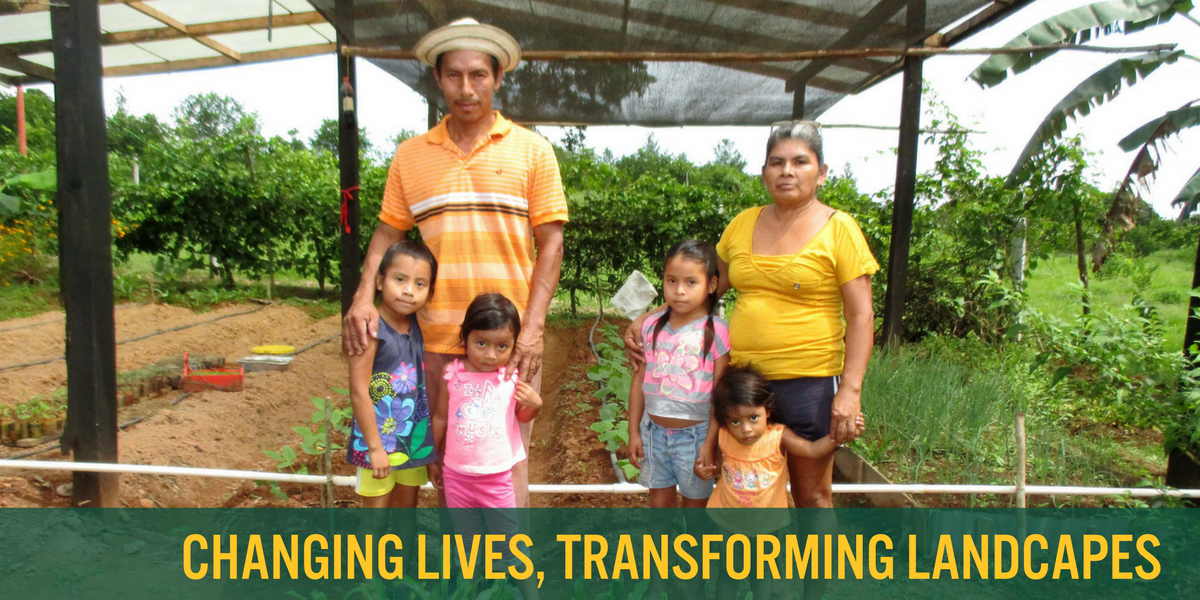
Rafael Rodríguez and María Hernández welcome family, friends, and other visitors to their home, where they are hard at work creating a sustainable future in La Candelaria, Panama. - Photo by Daysbeth López
LA CANDELARIA, Panama – It’s lunchtime at the home of Rafael Rodríguez and María Hernández in the small community of La Candelaria, Panama. Like most days, the scene is jovial. Grandchildren laugh and play outdoors. Nearby, Rafael sits with friends and family under the porch outside the kitchen, their chairs facing the greenhouse in the backyard.
Even though their children are grown and have their own homes, they return to Rafael and María’s house for the midday meal often—meals piled high with nutritious food the couple has grown themselves. María cracks jokes and laughs. Rafael greets visitors with a quiet warmth. Rafael has a reputation for being a patient teacher, while María is known for her wonderful sense of humor.

Recent visitors to Rafael and Maria's farm include Sustainable Harvest International Field Impact Manager Ricardo Romero and Founder + President Flo Reed. - photo by Daysbeth López
Visitors to Rafael and María’s home can’t help but feel they are in special place. But it’s not just the elevated mood, or the meals of fresh vegetables, that make this family so memorable.
Rafael and María are skilled and creative workers. Partnering with Sustainable Harvest International has helped them to put their expertise and enthusiasm to use in a big way. They’ve built an innovative greenhouse and irrigation system, and Rafael has been constructing wood-conserving stoves for his neighbors. Rafael and María illustrate how one family’s work can have a tremendous impact on the success of an entire community.

Panama's field coordinator, Trujillo, provided input and materials for Rafael and Maria's projects. - photo by Daysbeth López
BIG IDEAS
Before partnering with Sustainable Harvest International, Rafael earned income as a builder. He and María had a small garden at home, but Rafael dreamed of creating an efficient farm that embraced new technologies. The couple also made hats to sell.
When La Candelaria first partnered with Sustainable Harvest International in 2015, Rafael was enthusiastic about collaborating with his field coordinator, Trujillo, and field trainer, Daysbeth López, on some big projects.

Rafael's farm plan is a drawing representing his vision for his future farm. Note the covered greenhouse structure in the foreground, and the water reservoir on the right!
FROM THE GREENHOUSE…
First, Rafael built a greenhouse on his property. He wanted a greenhouse to:
Provide shade for seedlings;
Shelter plants from rain deluge; and
Create a controlled growing environment.
Once the building was constructed, Rafael and María diversified their kitchen garden and began growing lettuce, radishes, and carrots, among many other delicious veggies. Rafael contributed his vision, labor and some materials to the project. Trujillo consulted on the design of the structure and supplied modest supplemental materials.

Rafael and Maria make biodegradable seed pots out of newspaper. - photo by Daysbeth López
Next, Rafael implemented an innovative drip irrigation system for the greenhouse. Water from a nearby river is pumped to an elevated tank near the greenhouse, and gravity feeds the water back down to the greenhouse through PVC pipes. Efficient and reliable, the irrigation system keeps seedlings watered, even in times of extreme drought (which is now common in La Candelaria due to climate change).
Now, Rafael and María carefully create handmade, biodegradable pots out of newspaper to plant the seedlings in. The best part about the greenhouse is that it allows them to produce seedlings, not just for themselves, but to sell to others in their community. In a part of the world where seeds are hard to come by and weather offers challenges to young plants, access to seedlings makes growing healthy food a much more attainable goal for many families. The greenhouse is just the beginning!
…TO THE KITCHEN
Rafael has been transforming kitchens in La Candelaria by building wood-conserving stoves. The stoves—which reduce the amount of wood consumed and reduce health risks related to smoke-inhalation—are an improvement Sustainable Harvest International often implements in communities where we work.

Rafael prepares materials for a new wood-conserving stove. - photo by Daysbeth López
We hired a contractor from the nearby city of Penome to build the first couple of new stoves in La Candelaria. Rafael assisted with these projects and learned how to make the stoves himself by working with the contractor.
Now, it’s no longer necessary for a contractor to travel to La Candelaria in order for families to receive the benefits of this improved technology. Rafael has built 15 stoves in his community and he hasn’t worked alone. Each time Rafael builds a stove, he collaborates with the recipient family. This hands-on approach can increase a family’s success in learning to use their new (but strange!) stove.
Even the materials for the stoves are a collaborative effort. The support of our generous donors provides brick, cement, and rebar, and families who partner with us provide sand, ash, and wood.

María Hernández inspects a new wood-conserving stove. - photo by Daysbeth López
WHY STOVES?
Wood-conserving stoves directly affect the impact many families have on the areas where they live. It takes a lot of trees to cook all the meals for a large family on an open fire—25 pounds of wood a day, in fact. The DAMAK-style stoves built in Panama use just 12 pounds of wood a day. That’s a lot of fuel that doesn’t have to be lugged around, and a lot of trees left growing in Panama’s forest!
What’s more, the stoves Rafael builds decrease the amount of harmful smoke released into the air. Exposure to traditional stoves is the equivalent of smoking two packs of cigarettes a day per family.
For women like María, who spend a significant amount of time preparing meals for large families, the impact of a healthier stove on physical well-being is remarkable.
A TRUE COLLABORATION
Like so many of the farmers we partner with, Rafael and María’s relationship with us is truly a two-way street—we learn as much from them as they learn from us.

María and Rafael demonstrate how to make biodegradable seed pots to Sustainable Harvest International Field Trainers Daysbeth López and Maribel Ojo. - photo by Edilberto Trujillo
Rafael will continue to provide stove maintenance to his neighbors. He is teaching his grandson how to build the stoves, too, and looks forward to mentoring a new generation that will lead to a healthier future in La Candelaria.
In the meantime, family and friends will continue to gather at María and Rafael’s house for the mid-day meal. Their children and grandchildren will continue to help grow, sell, and plant seedlings, craft hats, and dream up new projects that their whole community can benefit from.
Rafael and María have only been working with Trujillo, Daysbeth, and Sustainable Harvest International for two years—we can’t wait to see what the future looks like for these changemakers!

María Hernández and some of her own grandchildren with the wood-conserving stove Rafael made for hs own family. - photo by Daysbeth López
Want to provide a stove to a family in Central America? A $60 donation supports materials and construction! Keep an eye out for more stories about wood-conserving stoves soon.